 Solution Bowl
The business landscape in India's National Capital Region is evolving at an unprecedented pace, and enterprises are increasingly turning to advanced technological solutions to stay competitive. The demand for ERP services in NCR has surged dramatically as businesses recognize the critical role these systems play in digital transformation. Among these solutions, Enterprise Resource Planning (ERP) systems have emerged as the backbone of modern business operations, transforming how organizations manage their resources, processes, and data.
As we navigate through 2026, the demand for ERP services has reached new heights, with businesses of all sizes recognizing the critical role these systems play in driving efficiency, productivity, and sustainable growth. This comprehensive guide explores how ERP service providers in the region are reshaping the digital transformation journey for countless organizations.
Understanding the ERP Revolution in NCR
The National Capital Region, home to thousands of enterprises ranging from startups to multinational corporations, has become a thriving hub for digital innovation. Companies here face unique challenges, including fierce competition, regulatory compliance requirements, and the constant need to optimize operations. This is precisely wherethe best ERP services make a transformative difference.
An ERP system integrates various business functions—from finance and human resources to supply chain management and customer relations—into a single, unified platform. This integration eliminates data silos, reduces redundancy, and provides real-time insights that empower decision-makers to act swiftly and strategically.
What makes NCR particularly dynamic is the diverse range of industries operating here. Manufacturing units in Gurgaon, IT companies in Noida, trading businesses in Delhi, and logistics operations in Faridabad all require tailored ERP solutions that address their specific operational challenges while remaining scalable and future-ready.
Why Businesses Choose Custom ERP Solutions
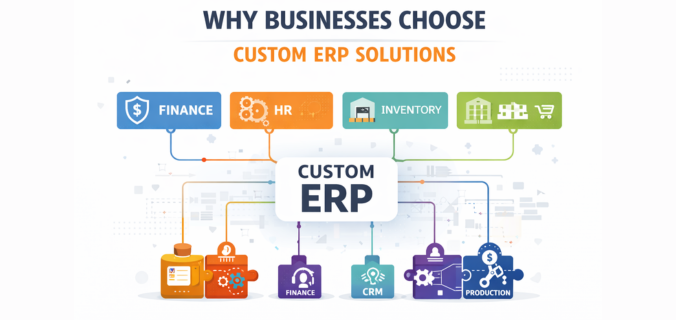
While off-the-shelf software packages offer standardized features, they often fall short when it comes to addressing the nuanced requirements of individual businesses. This gap has led to the rising popularity ofcustom ERP solutions for businesses across NCR.
- Tailored functionality: Every business operates differently, with unique workflows, reporting needs, and compliance requirements. Custom solutions are built around your specific processes rather than forcing you to adapt to generic software.
- Scalability and flexibility: As your business grows, your ERP system should grow with it. Custom solutions can be designed with expansion in mind, allowing for seamless addition of new modules, users, or functionalities.
- Competitive advantage: A well-designed custom ERP can become a strategic asset, incorporating proprietary business logic and workflows that differentiate you from competitors.
- Better integration capabilities: Custom ERPs can be designed to integrate smoothly with your existing systems, legacy applications, and third-party tools without the compatibility issues that plague generic solutions.
- Cost-effectiveness over time: While the initial investment might be higher, custom ERPs eliminate recurring licensing fees for unused features and reduce the need for expensive workarounds.
The ERP Implementation Journey
Selecting an ERP service provider is just the beginning of your digital transformation journey. The implementation phase is where strategy meets execution, and choosing experienced ERP implementation services India providers can mean the difference between success and costly delays.
A well-structured implementation typically follows these critical phases:
- Discovery and Planning: This foundational stage involves a comprehensive analysis of your current business processes, pain points, and objectives. The implementation team collaborates with stakeholders across departments to document requirements, define project scope, and establish success metrics. This phase also includes infrastructure assessment and resource planning.
- System Design and Customization: Based on the gathered requirements, the ERP solution is designed to align with your business workflows. This stage involves configuring modules, customizing features, designing user interfaces, and establishing data migration strategies. For custom solutions, this is when developers create bespoke functionalities that address your unique needs.
- Data Migration and Integration: One of the most critical aspects of ERP implementation is transferring existing data from legacy systems to the new platform. This process requires meticulous planning to ensure data accuracy, consistency, and completeness. Integration with other business systems is also configured during this phase.
- Testing and Quality Assurance: Before going live, rigorous testing validates that the system functions as intended. This includes unit testing, integration testing, user acceptance testing, and performance testing under various scenarios.
- Training and Change Management: Technology alone doesn't guarantee success—your team needs to embrace and effectively use the new system. Comprehensive training programs, documentation, and ongoing support help ensure smooth user adoption.
- Go-Live and Support: The transition to the new system is carefully managed to minimize disruption. Post-implementation support addresses any issues that arise and ensures the system operates optimally.
Key Features of Modern ERP Solutions
- Today's ERP solutions go far beyond basic resource planning. Leading providers in NCR offer sophisticated platforms equipped with cutting-edge capabilities:
- Cloud-based architecture has revolutionized ERP accessibility, allowing businesses to access their systems from anywhere while reducing infrastructure costs and maintenance burdens. This flexibility has become essential in the era of remote work and distributed teams.
- Artificial intelligence and machine learning capabilities are being integrated to provide predictive analytics, automated decision-making, and intelligent process optimization. These features help businesses anticipate trends, identify opportunities, and mitigate risks before they escalate.
- Mobile accessibility ensures that key stakeholders can monitor operations, approve workflows, and access critical information on-the-go, enhancing responsiveness and agility.
- Advanced reporting and business intelligence tools transform raw data into actionable insights through intuitive dashboards, customizable reports, and real-time analytics that support data-driven decision-making.
Selecting the Right ERP Service Provider in NCR
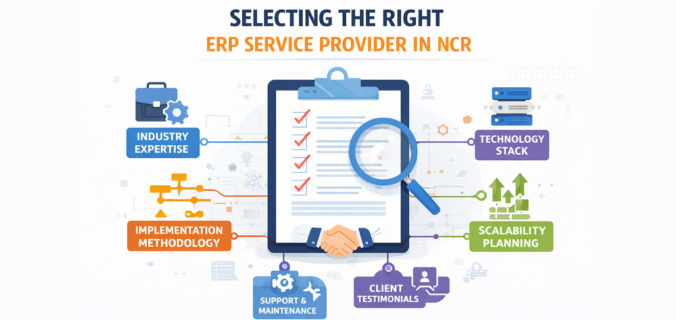
With numerous companies offering ERP services, choosing the right partner requires careful evaluation. Here are essential factors to consider:
- Industry expertise: Look for providers with proven experience in your specific sector. They'll understand your unique challenges and regulatory requirements better.
- Technology stack: Ensure the provider uses modern, robust technologies that align with your IT infrastructure and future technology roadmap.
- Implementation methodology: Assess their project management approach, timelines, and track record of on-time, on-budget deliveries.
- Support and maintenance: Post-implementation support is crucial. Verify the provider offers comprehensive maintenance, updates, and troubleshooting assistance.
- Client testimonials and case studies: Review success stories from businesses similar to yours to gauge the provider's capability and reliability.
- Scalability planning: Your ERP should accommodate future growth. Discuss how the solution can evolve with your business needs.
Industry-Specific ERP Applications in NCR
Different industries leverage ERP systems in distinctive ways, and the best ERP services recognize these variations:
- Manufacturing: ERP systems optimize production planning, inventory management, quality control, and supply chain coordination, helping manufacturers reduce waste, improve efficiency, and meet delivery commitments.
- Retail and E-commerce: Integration of point-of-sale systems, inventory management, customer relationship management, and omnichannel operations enables retailers to deliver seamless customer experiences while maintaining operational efficiency.
- Healthcare: Medical institutions use ERPs to manage patient records, billing, inventory of medical supplies, staff scheduling, and compliance with healthcare regulations.
- Education: Educational institutions streamline admission processes, student information management, fee collection, academic planning, and resource allocation through specialized ERP modules.
- Service Industries: Professional services firms benefit from project management, resource allocation, time tracking, and billing functionalities that improve profitability and client satisfaction.
The ROI of ERP Implementation
- Investing in custom ERP solutions for businesses delivers measurable returns across multiple dimensions:
- Operational efficiency gains typically range from 20-40% as automated processes replace manual tasks, reducing errors and accelerating workflows. Employees spend less time on data entry and more time on value-adding activities.
- Improved inventory management reduces carrying costs while preventing stockouts and optimizing working capital utilization. Real-time visibility into inventory levels enables better purchasing decisions.
- Enhanced financial control through integrated accounting, budgeting, and reporting capabilities improves cash flow management and reduces financial risks.
- Better customer service resulting from faster order processing, accurate information, and improved communication strengthens client relationships and drives repeat business.
- Data-driven decision-making enabled by comprehensive analytics helps leadership identify growth opportunities, optimize resource allocation, and respond quickly to market changes.
Future Trends Shaping ERP in 2026 and Beyond
The ERP landscape continues to evolve rapidly, with several trends gaining momentum:
Internet of Things (IoT) integration is connecting physical assets to ERP systems, enabling real-time monitoring, predictive maintenance, and automated inventory replenishment based on actual consumption patterns.
Blockchain technology is being incorporated for enhanced security, transparency in supply chains, and immutable audit trails that strengthen compliance and trust.
Voice and conversational interfaces are making ERP systems more accessible, allowing users to query data, generate reports, or initiate processes using natural language commands.
Sustainability modules help businesses track environmental impact, optimize resource consumption, and report on ESG (Environmental, Social, and Governance) metrics as stakeholder pressure for corporate responsibility intensifies.
Making Your ERP Journey Successful
Digital transformation through ERP implementation represents a significant commitment of resources, time, and organizational energy. Success requires more than just selecting the right technology—it demands strategic planning, stakeholder buy-in, and a commitment to change management.
Working with experienced providers offering comprehensive ERP implementation services in India ensures you navigate potential pitfalls and maximize the value of your investment. The right partner doesn't just deliver software; they become a strategic ally in your transformation journey, offering guidance, expertise, and support every step of the way.
Conclusion
As NCR continues to cement its position as India's business powerhouse, organizations that embrace digital transformation through robust ERP systems position themselves for sustainable competitive advantage. The convergence of cloud computing, artificial intelligence, and industry-specific customization has made ERP solutions more accessible, powerful, and valuable than ever before.
Whether you're a growing startup looking to establish scalable processes, a mid-sized enterprise seeking operational excellence, or a large corporation navigating complex multi-location operations, the right Affordable ERP services in NCR can transform your business operations and unlock new levels of efficiency and growth.
The question is not whether to implement an ERP system, but rather which solution and which provider will best serve your unique needs. By carefully evaluating your requirements, selecting an experienced ERP service provider, and committing to a structured implementation process, you can ensure your ERP journey delivers the transformative results your business deserves.
Take the first step toward digital transformation today—your future competitive advantage depends on it.